
Life Style
ASME PVHO-1 Hyperbaric Chamber Standard: What It Means and Why It Matters
Aug
Anyone shopping for a hard hyperbaric chamber eventually runs into the term PVHO-1. It shows up on spec sheets, in manufacturer marketing, and in the fine print of clinic procurement documents, usually presented as a mark of quality without much explanation of what it actually verifies. Given how much a chamber costs and how directly it relates to personal safety, it’s worth understanding what this standard covers, how it differs from other pressure vessel codes, and how to confirm a chamber genuinely meets it rather than just mentioning it.
What the ASME PVHO-1 Standard Actually Is
PVHO-1 is short for the American Society of Mechanical Engineers’ Safety Standard for Pressure Vessels for Human Occupancy. First established in 1977, it sets requirements for the design, fabrication, inspection, testing, marking, and stamping of any pressure vessel built to enclose a person, along with the piping systems that support it.
The standard applies to a specific and fairly narrow category of equipment: any vessel that encloses a human being at a pressure differing from the surrounding atmosphere by more than 2 psi. That threshold is lower than most people expect. It’s not there because 2 psi sounds dangerous on its own. It’s there because a sudden loss of pressure, even at that modest level, can cause real injury to someone inside. PVHO-1 covers a range of vessels beyond hyperbaric chambers, including diving bells, submersibles, and personnel transfer capsules, but medical and wellness hyperbaric chambers are one of its most common applications today. A companion standard, PVHO-2, separately governs how PVHO-1-compliant vessels should be maintained and operated once they’re in service.
One important distinction: being within the scope of PVHO-1 does not automatically mean that every chamber in every U.S. jurisdiction is legally required to carry a PVHO-1 certification/stamp. Whether compliance is legally mandated depends on the applicable state/local code, authority having jurisdiction, intended use, and other regulatory requirements.
Why a Human-Occupancy Standard Exists Separately From General Pressure Vessel Codes
Pressure vessels in general are governed by ASME Section VIII, a well-established code used across industries for tanks, boilers, and containers that hold pressure but don’t hold people. For years, some manufacturers built hyperbaric chambers to that general standard and called it sufficient. It wasn’t, for a few concrete reasons.
Section VIII didn’t require the vessel to warn its occupant before failing. This is the most consequential gap, and it’s specifically about windows. Section VIII permitted the use of standard viewport glass, which can fail suddenly and catastrophically under repeated pressure cycling, with no warning signs beforehand. PVHO-1 instead requires acrylic windows engineered and tested to a completely different standard: acrylic shows visible stress, crazing, and discoloration well before it’s at risk of failing, giving operators a warning window that glass simply doesn’t provide. This distinction traces back to extensive US Navy testing on acrylic viewports in the 1970s, which became foundational to how PVHO-1 treats window materials.
Section VIII didn’t account for the specific fatigue pattern of repeated human-occupied pressure cycling. A chamber used for daily sessions goes through thousands of pressurization and depressurization cycles over its service life, a fatigue pattern that general industrial pressure vessels don’t necessarily experience in the same way. PVHO-1’s design and testing requirements are built around that repeated-cycle reality specifically.
Section VIII created a loophole some manufacturers exploited. Because Section VIII didn’t address acrylic at all, a small number of manufacturers historically tested vessels using metal blanks in place of windows, obtained a Section VIII stamp, and then installed acrylic viewports afterward, a practice that let equipment carry a pressure vessel certification without that certification ever actually having tested the window material occupants would be looking through. PVHO-1 closes that gap by requiring the actual window materials and configuration to be part of what’s tested and certified.
How to Identify a Genuinely PVHO-1 Compliant Chamber
Because “PVHO-1 compliant” and “PVHO-1 certified” get used loosely in marketing, it’s worth knowing what actual compliance looks like on paper:
An ASME U-Stamp specific to the vessel. Certification under PVHO-1 is documented through ASME’s U-Stamp program, tied to the specific vessel design and its manufacturing facility, not a general claim about the manufacturer’s practices elsewhere.
Third-party inspection during fabrication, not just after the fact. Legitimate PVHO-1 certification involves inspection at the point of manufacture, not a vessel that was built first and evaluated later.
Documentation naming the specific window material and testing. Ask directly whether the acrylic used in the chamber’s windows was tested as part of the certification. This is the exact gap PVHO-1 was designed to close, so it’s worth confirming directly rather than assuming.
A facility that can produce the paperwork on request. A manufacturer that has genuinely certified a chamber to PVHO-1 should be able to provide documentation without hesitation. Vague answers or a redirect to general “quality certifications” instead of the specific PVHO-1 stamp is a reasonable signal to ask more questions.
Where PVHO-1 Fits Among Other Chamber Standards
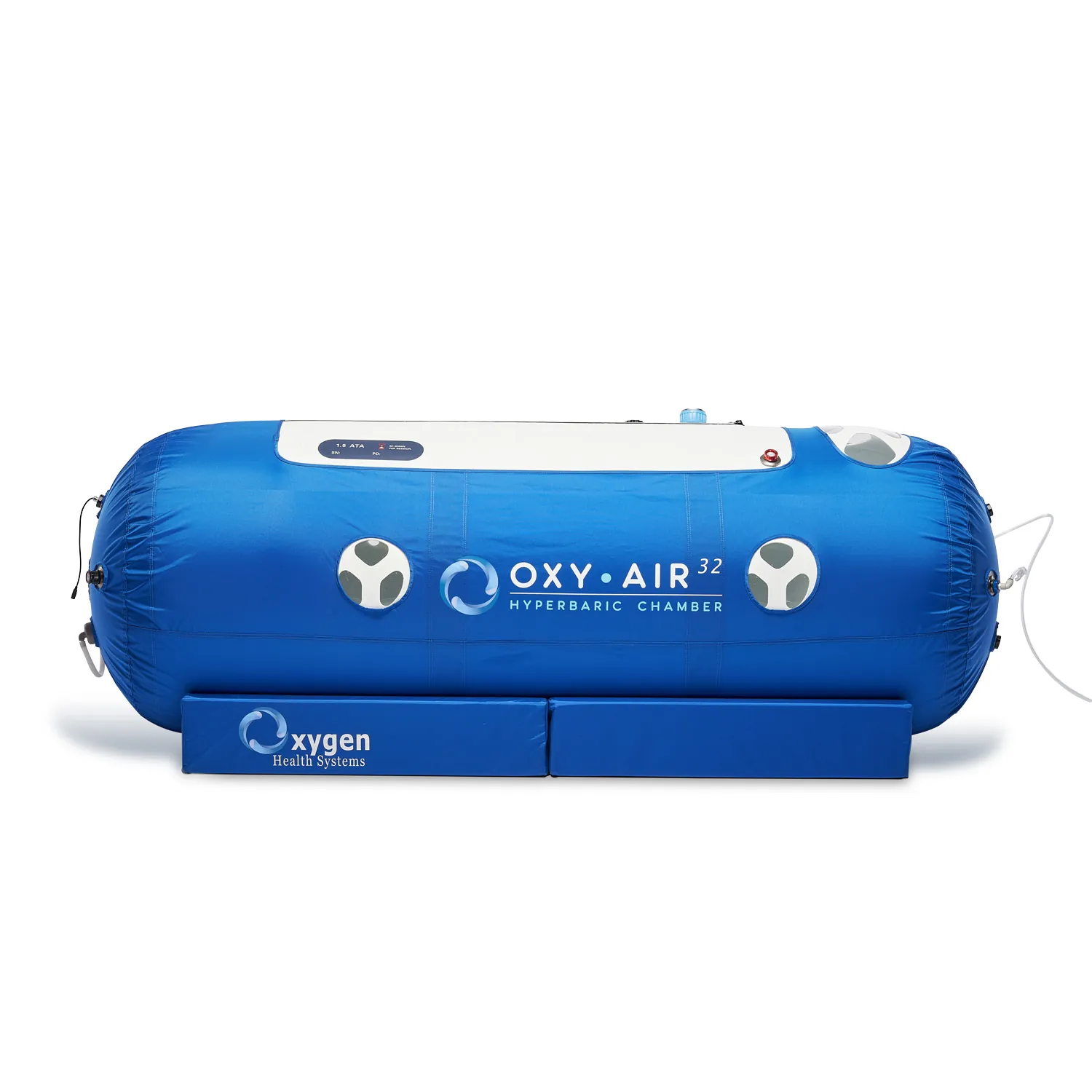
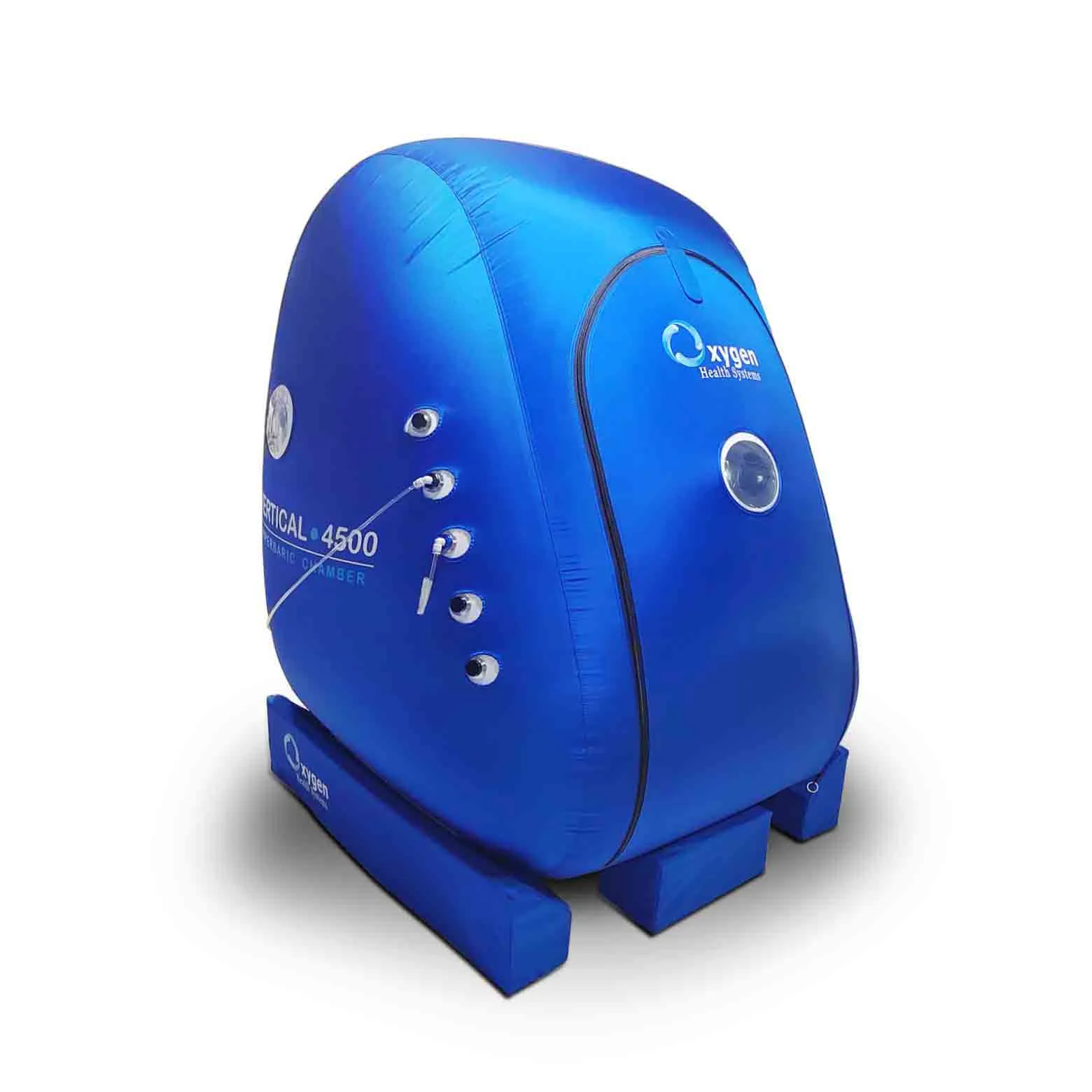
Soft, fabric-sided hyperbaric chambers generally operate below the 2 PSI differential threshold that triggers PVHO-1 applicability, which is part of why they’re regulated differently (in the US, typically as Class II medical devices) rather than under a pressure vessel standard. PVHO-1 becomes directly relevant once a chamber is a rigid, hard-shell design intended to operate at meaningfully higher pressure, which describes the majority of 2.0 ATA and higher hard chambers on the market, including those used for hyperbaric oxygen therapy at pressures up to roughly 3 ATA for routine use and higher for specific decompression treatment protocols.
Buyers sometimes also encounter other pressure vessel or equipment standards referenced alongside PVHO-1, such as CE marking (relevant for equipment sold in Europe) or general ISO quality management certifications like ISO 9001 and ISO 13485. These aren’t substitutes for PVHO-1. They address different things: CE marking and ISO certifications speak to manufacturing quality systems and regulatory conformity broadly, while PVHO-1 specifically addresses the structural and material safety of a pressure vessel meant to hold a person. A well-documented hard chamber will typically carry PVHO-1 certification alongside these other credentials, not instead of them.
Why This Matters for Buyers
For a hard hyperbaric chamber specifically, PVHO-1 certification is the difference between a vessel engineered from the ground up for repeated human-occupied pressure cycling and one that was adapted from general industrial pressure vessel practice. That distinction affects a few things directly: how the chamber’s windows behave as they age, how thoroughly the vessel was tested before it reached a buyer, and how much documentation exists if a facility, inspector, or insurer ever asks for it.
This is particularly relevant for wellness centers, clinics, and home buyers considering a higher-pressure hard chamber, since these are exactly the buyers least likely to have in-house engineering expertise to evaluate a vessel’s construction independently. Relying on a real, documented PVHO-1 certification, rather than general marketing language about safety and quality, is the more reliable way to verify a chamber was actually built to the standard that exists specifically for equipment like it.
A PVHO-1 Certified Option From Oxygen Health Systems
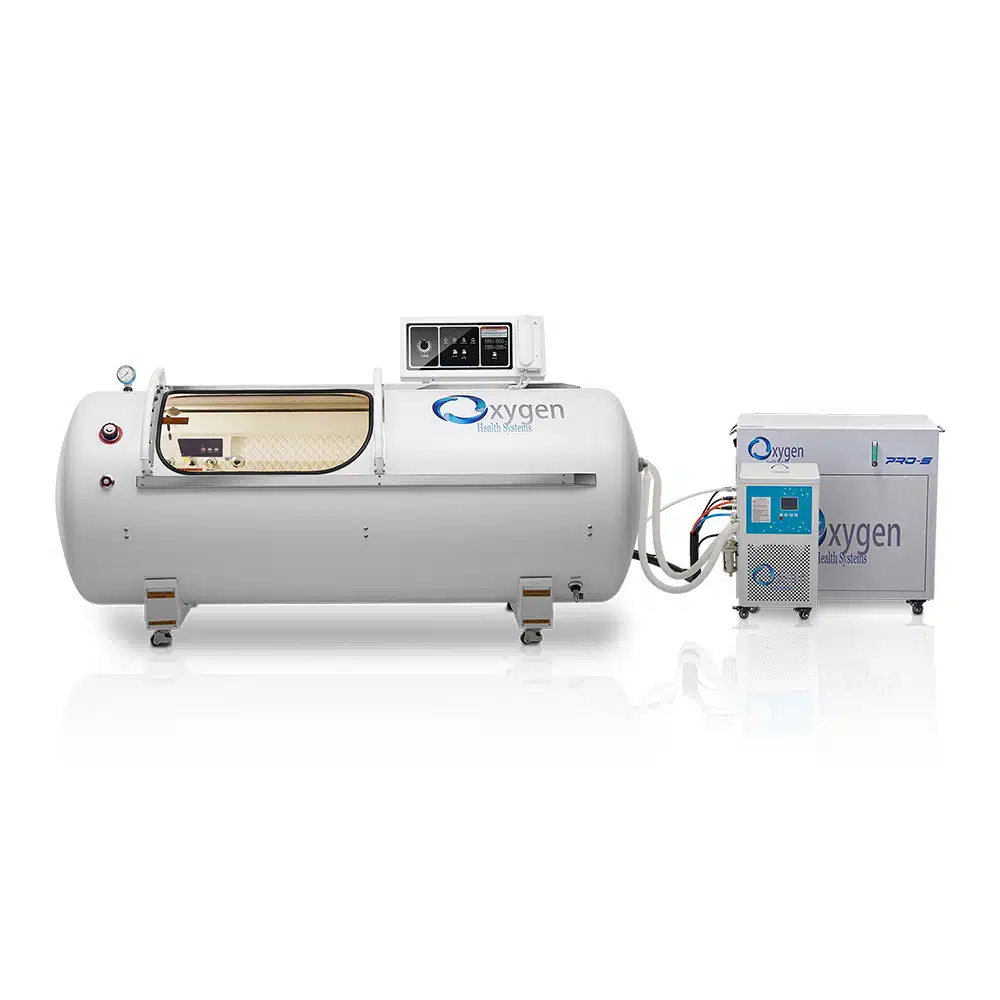
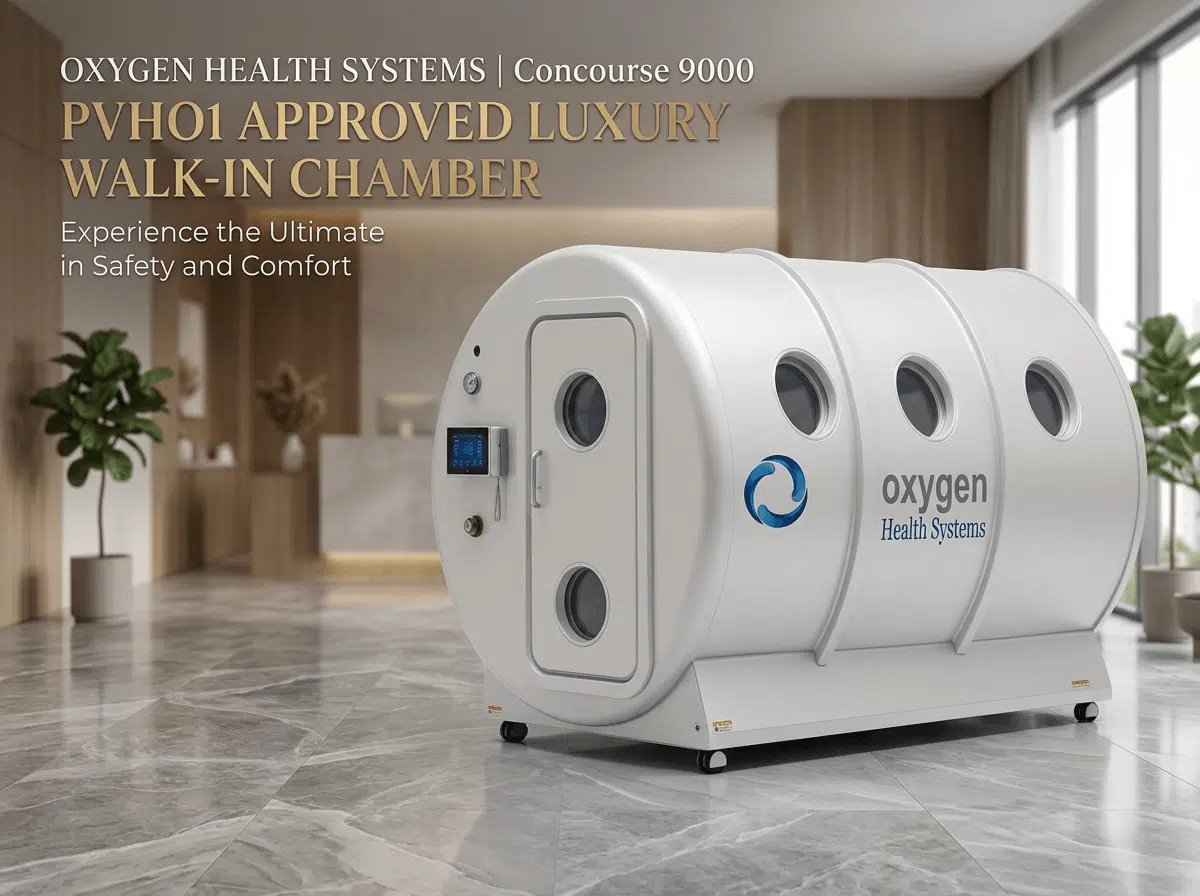
Oxygen Health Systems’ Concourse 9000 is a hard-shell multiplace hyperbaric chamber built and certified to ASME PVHO-1-2023, with an ASME U-Stamp, CE marking, and ISO 9001, ISO 13485, and ISO 14001 certified manufacturing. The chamber operates up to 2.0 ATA, uses a 304 stainless steel shell with acrylic viewports, and accommodates one to four occupants with a dual redundant compressor and oxygen concentrator system built in, so it doesn’t rely on external oxygen tanks. It’s backed by a three-year full warranty with lifetime phone support, and is built for wellness centers, physician practices, and home buyers evaluating a genuinely certified multiplace hard chamber.
Common Questions
Is PVHO-1 the same as FDA clearance? No. PVHO-1 certifies the structural and material safety of the pressure vessel itself. FDA clearance is a separate regulatory process that applies to the chamber as a medical device and to the specific medical claims made about it. A chamber can be genuinely PVHO-1 certified and still not be FDA-cleared for treating specific medical conditions, so it’s worth asking about both separately.
Do soft hyperbaric chambers need PVHO-1 certification? Generally no. Most soft chambers operate below the 2 psi pressure differential threshold where PVHO-1 applies, and are instead regulated under a different framework (in the US, typically as Class II medical devices).
What’s the difference between a chamber that’s PVHO-1 compliant and one that’s PVHO-1 certified? “Compliant” is sometimes used loosely to suggest a chamber follows similar principles, without third-party certification behind it. “Certified” should mean the specific vessel carries a documented ASME U-Stamp tied to that design and manufacturing facility. Ask for the actual certification documentation rather than relying on the terminology alone.
Why do PVHO-1 chambers use acrylic windows instead of glass? Acrylic shows visible signs of stress, such as crazing or discoloration, before it’s at risk of failure, giving operators a warning that standard viewport glass doesn’t reliably provide under repeated pressure cycling. This is one of the specific gaps in general pressure vessel codes that PVHO-1 was built to close.
The Bottom Line
ASME PVHO-1 exists because equipment built to enclose a person under pressure has to meet a higher and more specific bar than general industrial pressure vessels, particularly around window materials and repeated-cycle fatigue testing. For anyone evaluating a hard hyperbaric chamber, confirming genuine PVHO-1 certification, backed by real documentation rather than marketing language, is one of the most concrete ways to verify that a chamber was actually engineered for the job it’s being sold to do.
Oxygen Health Systems’ Concourse 9000 is manufactured and certified to ASME PVHO-1-2023, with full documentation available on request.
Schedule a free consultation with an Oxygen Health Systems specialist
Oxygen Health Systems | Woodridge, Illinois | Ships from the US | ASME PVHO-1-2023 Certified | ISO 9001, ISO 13485, ISO 14001 Certified | Three-Year Manufacturer’s Warranty