
Hyperbaric Oxygen Therapy
Can HBOT and Recovery Services Make Your Gym More Profitable?
Sep
Non-dues revenue is the income a gym earns from everything other than membership fees, and it’s one of the standard measures operators use to judge the health of a facility. The Health & Fitness Association’s 2025 Fitness Industry Benchmarking Report, built on confidential data from 175 companies covering more than 17,000 facilities, tracks that figure alongside revenue per location, retention and reinvestment. Reporting operators posted median revenue growth of 9.9% in 2024 and a median EBITDA margin of 23.6%, with average member retention of 66.4%. Recovery services sit inside that non-dues category, and they’ve moved from a niche add-on to something members increasingly expect to find on the floor.
This article looks at whether recovery services can improve a gym’s profitability, what the research says about the physiological side, how the revenue math tends to work, and what you’d need to have in place before you commit to equipment.
What Counts As A Recovery Service
Recovery covers any service a member uses after training to support the return to normal function. In commercial gyms, the most common offerings are:
- Compression therapy, using pneumatic boots or sleeves on the legs and hips.
- Percussive and manual therapy, from massage guns through to a sports massage room with a therapist on site.
- Contrast temperature services, including saunas, infrared cabins and cold plunge tubs.
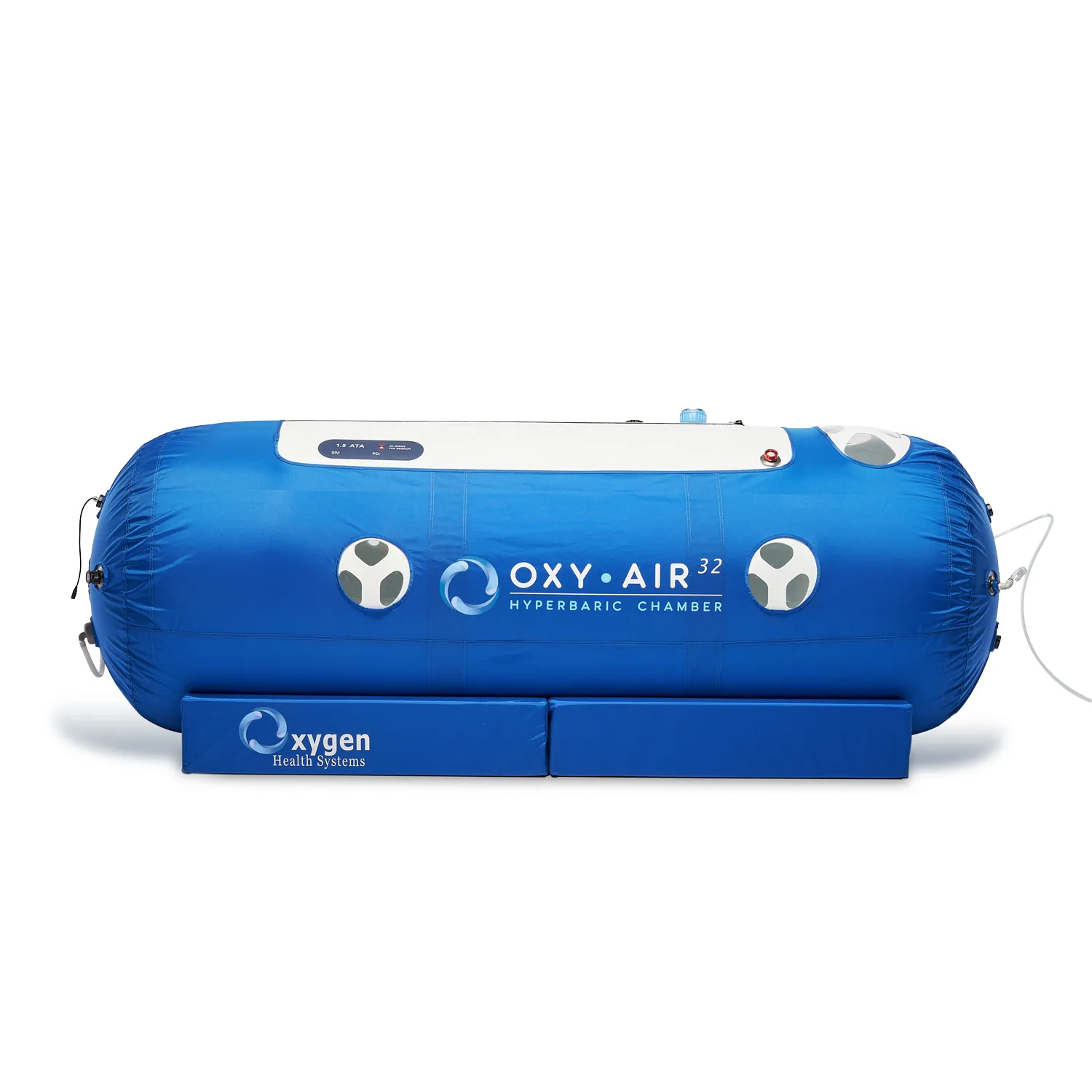
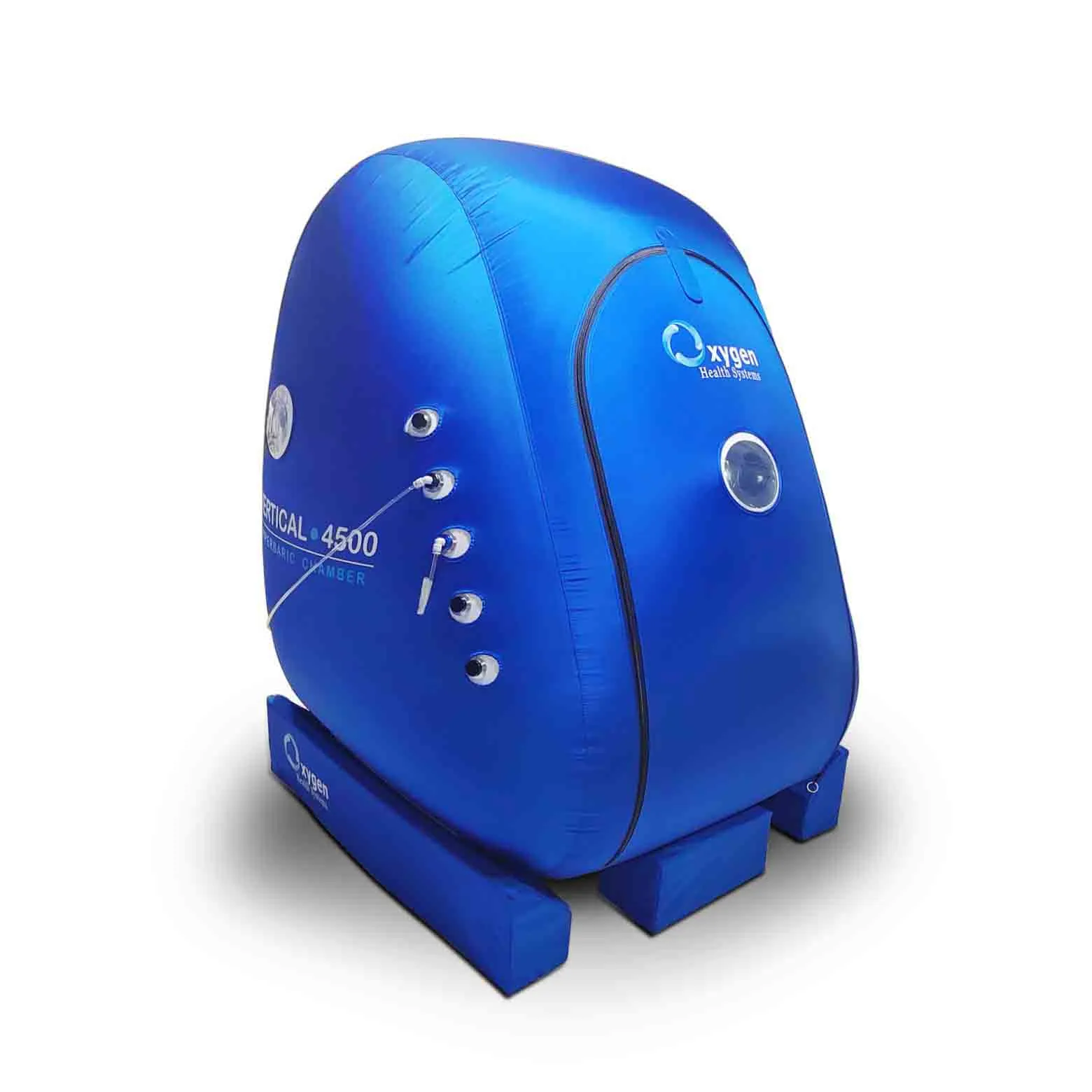
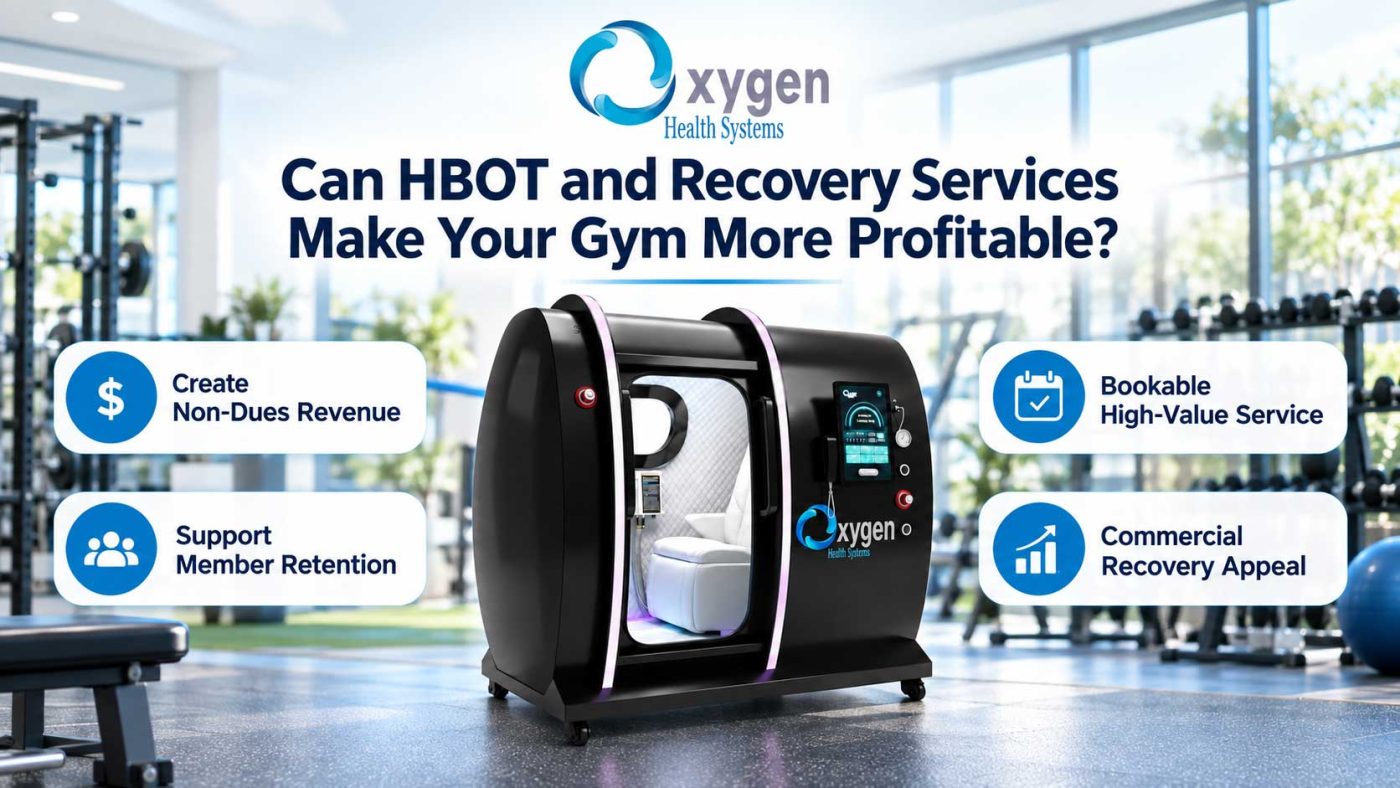
- Hyperbaric oxygen therapy (HBOT), where a member sits or lies in a pressurised chamber breathing oxygen-enriched air at above sea-level pressure.
- Red light and photobiomodulation panels, usually sold in short sessions or as part of a recovery bundle.
The difference between these options matters commercially. A massage gun station is cheap to install and almost impossible to charge for. A chamber, a plunge pool or a therapy room can be booked, scheduled and billed, which is what turns a recovery area into a revenue line.
How The Revenue Maths Tends To Work
Recovery services earn money in three ways: paid single sessions, recovery-inclusive membership tiers, and packages sold alongside personal training. Most operators end up using a mix, because single sessions bring in trial users and tiers create predictable monthly income.
The table below is an illustration of how a single recovery asset can be modelled. These aren’t benchmark figures, and you should replace every number with your own pricing, utilisation and local rates before drawing conclusions.
| Model input | Conservative | Moderate | Strong |
| Sessions sold per day | 3 | 5 | 8 |
| Average session price | $45 | $55 | $65 |
| Operating days per month | 26 | 28 | 30 |
| Gross monthly revenue | $3,510 | $7,700 | $15,600 |
| Staff, consumables and utilities | $1,400 | $2,000 | $2,800 |
| Contribution before equipment cost | $2,110 | $5,700 | $12,800 |
Two things drive that spread. The first is utilisation, which depends on whether sessions are bookable through your existing app and whether your front desk is trained to offer them. The second is price positioning against local competition, including med spas and standalone recovery studios, which often charge more than gyms do for the same service.
If you want to model the payback period on a specific chamber against your own member numbers and session pricing, you can run the figures through our ROI calculator before you speak to anyone about equipment.
What The Research Says About Recovery Under Pressure
Members will ask whether the service does anything, and your staff need an answer that holds up. For hyperbaric oxygen therapy, the research on exercise recovery is worth knowing in some detail.
A 2025 systematic review and meta-analysis published in the Archives of Physical Medicine and Rehabilitation pooled 10 randomised controlled trials covering 299 participants and found that hyperbaric oxygen therapy significantly accelerated recovery from exercise-induced muscle injury. That’s a meaningful signal, though the total sample is small by the standards of clinical research, and the included trials varied in how they induced muscle damage and what pressures they used.
A separate crossover trial in Chinese university male athletes looked at repeated mild hyperbaric sessions after a six-day fatigue protocol. The researchers reported improvements in subjective sleep quality, brain and muscle tissue oxygenation, and aerobic performance compared with the control condition. Anaerobic capacity, measured by the Wingate test, didn’t improve. That mixed result is useful for your marketing, because it tells you which claims are supportable and which aren’t. Sleep and perceived recovery are defensible talking points. Explosive power isn’t.
Neither study is a reason to promise outcomes. What they do give you is a research-backed reason to offer the service, and a way to answer a sceptical member without overselling. If your team wants a general grounding in the mechanism before you train them on the floor, the OHS guide to hyperbaric oxygen therapy covers how pressure and oxygen delivery interact.
Where Recovery Fits In The Membership Model
The most common mistake is treating recovery as a separate business that happens to share a building. It works better as a structural part of how you sell memberships.
A three-tier structure is the usual approach. The base tier stays at your current price with no recovery access. The middle tier adds a set number of recovery sessions each month. The top tier includes unlimited access to the recovery zone plus priority booking. Members who move up a tier are more expensive to lose, and they visit more often, which is the retention argument behind the pricing.
Personal training packages are the second natural fit. A trainer who can schedule a recovery session into a client’s week has something to sell that isn’t another hour of their own time, and the margin on that session doesn’t depend on their availability.
Corporate and team accounts are a third option if you’re near offices, a university, or a semi-professional club. These accounts book in blocks, use off-peak hours, and smooth out the utilisation gaps that make single-session pricing unpredictable.
Space, Staffing And Practical Requirements
Before any of the revenue modelling means anything, you need to know the service will physically work in your building.
- Footprint and access. A commercial chamber needs its own room or a partitioned area with clearance around it for entry, maintenance and airflow. Measure your access route as well as the room, including doorways, corridor turns and any lift you’d need to use.
- Power and ventilation. Compressors and concentrators draw power continuously during a session, and the room needs adequate ventilation. Your electrician should confirm the circuit well before the delivery date.
- Staff cover. Someone trained has to start, monitor and close each session. In practice that means either a dedicated recovery attendant during peak hours or a rota that gives your floor team formal responsibility for the area.
- Insurance and documentation. Your insurer will want to know what equipment you’ve installed, what certifications it carries, and what your intake and supervision process looks like. Build the paperwork before you open bookings.
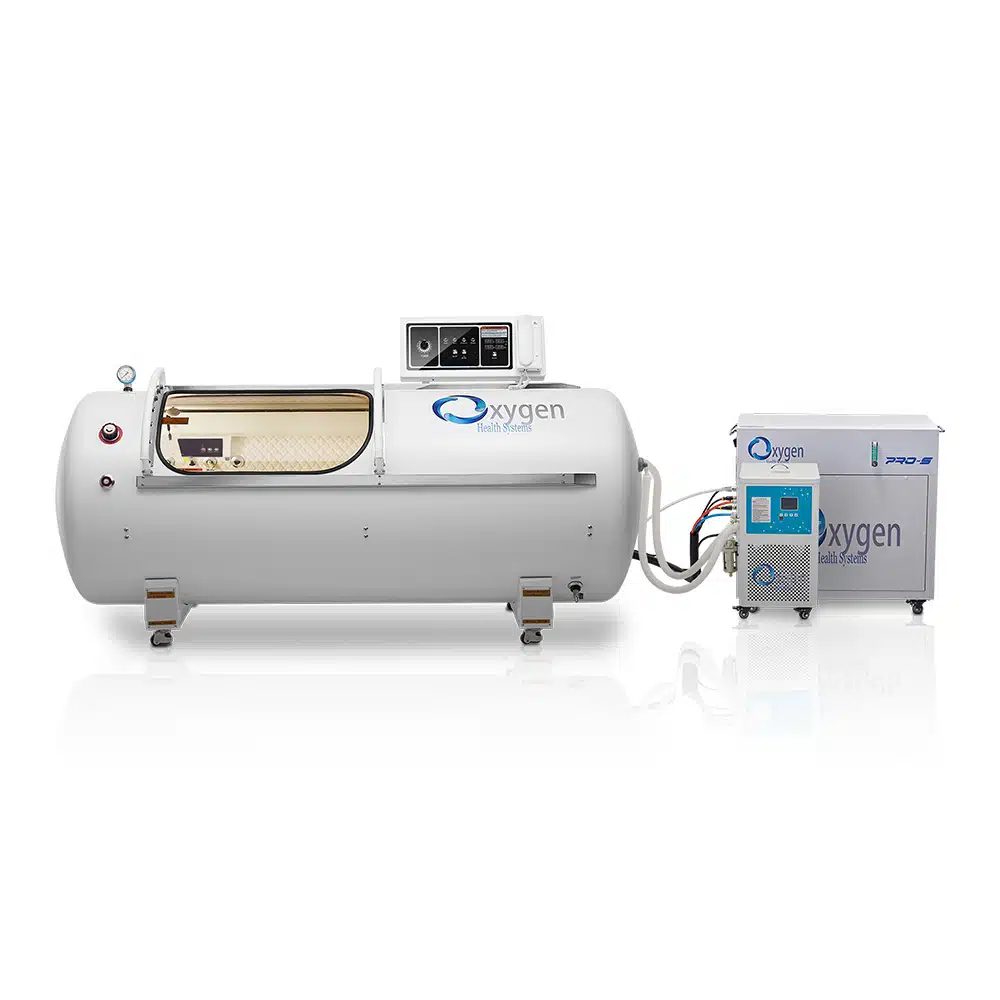
Build quality is the variable that most affects all four of these. Commercial settings run chambers far harder than home users do, so the specification you’d accept for a private buyer isn’t the specification you want on a gym floor. Across our range, one of our chambers is certified ASME-PVHO-1, and the wider product line is manufactured under ISO 13485, ISO 9001:2015 and ISO 14001 quality systems. Ask any supplier which specific model carries which certification, because the answer varies by unit.
Pricing Without Undercutting Your Core Offer
There’s a risk in bundling too much recovery into your standard membership. If every member gets unlimited access at no extra cost, you’ve added operating expense and staff time without adding revenue, and you’ve removed the reason for anyone to upgrade.
A few principles keep the pricing sensible. Anything that requires a booking and a member of staff should be charged for separately, since that’s where your operating cost sits. The mid tier works best with a capped monthly allowance, which leaves the top tier somewhere to go. Single sessions should be priced high enough that upgrading a membership looks like obvious value, because the upgrade is what you actually want.
It’s also worth conceding the limits here. Recovery services won’t fix a retention problem caused by poor equipment maintenance, a crowded floor at 6pm or weak coaching. They add margin to a facility that’s already working. Operators who install a recovery zone hoping it’ll compensate for a deteriorating core offer tend to be disappointed.
Questions To Answer Before You Commit
Run through these before you take a quote:
- How many of your current members would pay for recovery at your intended price, based on what you already know about PT uptake?
- What’s the realistic booking capacity of the space you have, in sessions per day, allowing for turnaround time?
- Who on your team will own the service, and what training do they need?
- What does your insurer require, and how long does that approval take?
- What’s the warranty, service interval and support arrangement on the equipment, and what happens if a unit goes down in month eight?
If you can answer all five with figures you’d be willing to defend, you’re in a position to judge whether the investment pays back on your timeline.
At Oxygen Health Systems, you get commercial hyperbaric equipment built for the session volumes a busy gym floor generates, with free Zoom training for your team and support seven days a week from a US-based company that’s been in the industry for ten years. Take a look at our medical-grade hard chambers to see the specifications, pressures and footprints available for commercial installations.
Frequently Asked Questions
How much does it cost to add recovery services to a gym?
The cost depends entirely on which services you add. Compression units and red light panels are the lowest entry point, while hyperbaric chambers, cold plunge installations and dedicated treatment rooms carry higher capital costs. Budget for installation, staff training and insurance adjustments alongside the equipment price.
Do recovery services actually increase member retention?
Retention gains come from members using more of what they pay for, and recovery services give members an additional reason to visit. The effect is strongest when recovery is tied to a membership tier or a training package, because that creates a scheduled reason to return.
How long does a hyperbaric session take in a commercial setting?
Sessions typically run between 60 and 90 minutes including pressurisation and depressurisation time. When you’re modelling capacity, allow additional turnaround time between bookings for cleaning and resetting the chamber.
Can a small gym justify a recovery zone?
Smaller facilities often do better with one bookable, high-value service. A single chamber or treatment room in a converted studio space can be profitable if utilisation is strong, and it costs far less to trial than a multi-service build-out.
What training do staff need to operate a hyperbaric chamber?
Operators need training on chamber operation, client screening, emergency procedures and maintenance checks. Reputable suppliers include this as part of the purchase, and it’s worth confirming what format the training takes and whether refresher sessions are available for new staff.
Sources
- Health & Fitness Association, 2025 Fitness Industry Benchmarking Report (September 2025): https://www.healthandfitness.org/health-fitness-association-releases-2025-fitness-industry-benchmarking-report/
- Effects of Hyperbaric Oxygen Therapy on Exercise-Induced Muscle Injury and Soreness: A Systematic Review and Meta-analysis, Archives of Physical Medicine and Rehabilitation (2025): https://www.sciencedirect.com/science/article/abs/pii/S000399932500824X
- Mild hyperbaric oxygen therapy on subjective sleep quality, aerobic, anaerobic exercise test, brain and muscle tissue oxygenation response in Chinese University male athletes after muscle fatigue, BMC Sports Science, Medicine and Rehabilitation: https://pmc.ncbi.nlm.nih.gov/articles/PMC13067794/