
Red Light Therapy
Can Red Light Therapy Make Your Med Spa More Profitable?
Sep
Red light therapy, also called photobiomodulation, uses visible red light in roughly the 600 to 700 nanometre range and near-infrared light above 800 nanometres. The light is absorbed by chromophores in the cell, primarily in the mitochondria, and the research interest centres on what that absorption does to cellular energy production and to fibroblast activity in the dermis.
Commercially, it’s one of the least demanding services a med spa can add. Sessions are short, the device does the work, and there are no consumables per treatment. Whether that translates into profit depends on how you price it, what you pair it with, and how many providers in your area already offer it.
The Short Answer
Red light therapy improves profitability when it’s sold as a course or a membership and scheduled into room time that would otherwise sit empty. It performs poorly as a standalone one-off service in a competitive market, because there’s very little to stop a nearby provider undercutting your price.
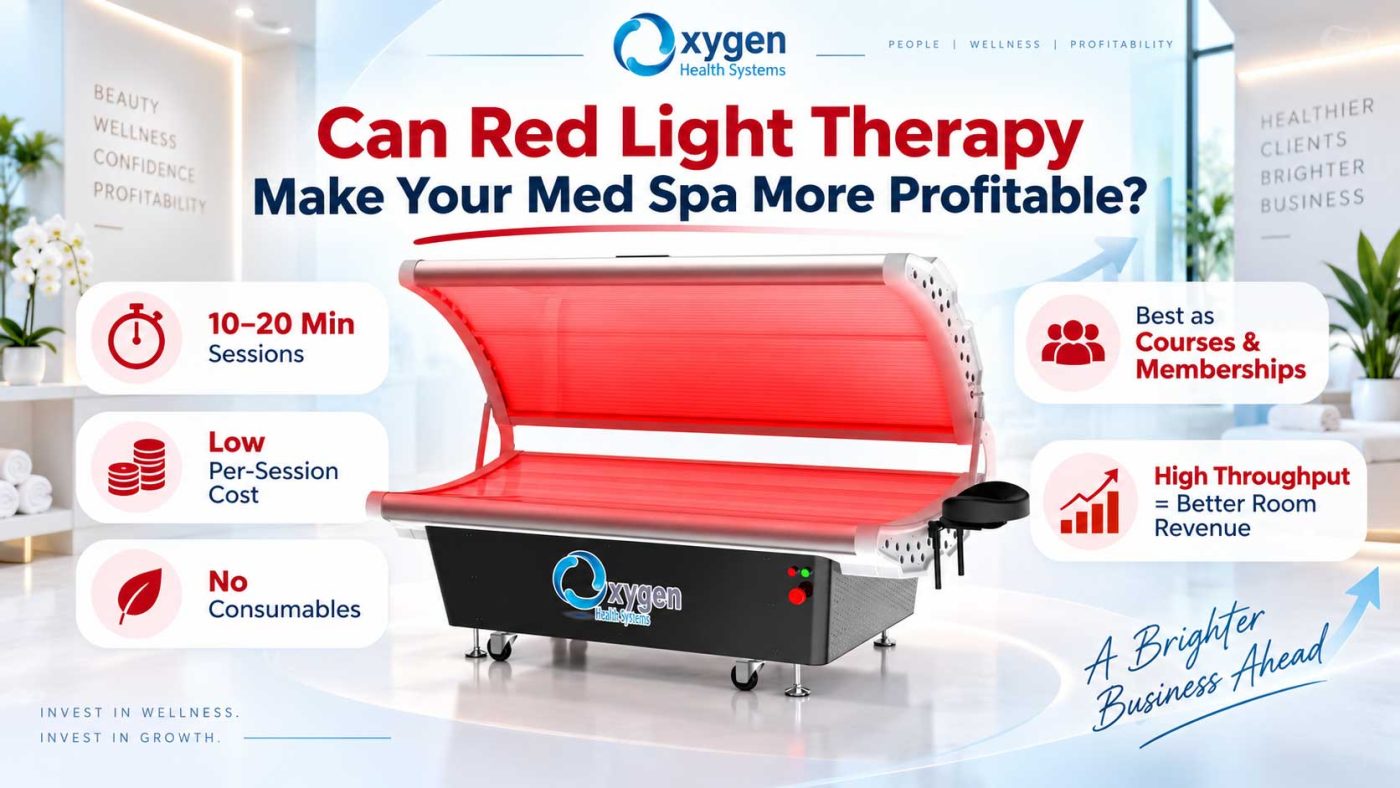
The reason is structural. Sessions typically run 10 to 20 minutes, need supervision from a trained attendant, and cost almost nothing per treatment beyond electricity and cleaning. High throughput and low delivery cost make the unit economics attractive, and they also make the service easy for competitors to copy.
What The Research Supports
Clients ask what it does, and the evidence for skin is reasonably specific.
A split-face randomised clinical trial published in Photobiomodulation, Photomedicine, and Laser Surgery recruited 137 women aged 40 to 65 and delivered 10 sessions over four weeks, comparing red light at 660 nanometres against amber at 590 nanometres at the same light dose. The trial reported a reduction in periocular wrinkle volume of around 30%.
Two points of context belong alongside that. The study looked at a specific area of the face over a short course, and the participants were a defined age group with defined photoaging grades. Results in a general client population won’t be identical.
What the study does justify is an accurate description of what was measured and a service structured as a course, since the effect came from a course of ten sessions. Med spas that sell single sessions with dramatic before-and-after language tend to generate complaints, while those that sell a four-week protocol with realistic framing tend to generate repeat bookings.
Where The Margin Actually Comes From
Four things drive the return on a red light installation:
- Throughput. Short sessions mean a single device can serve several clients an hour, so revenue per room hour is high relative to the equipment cost.
- Staffing cost. Supervision by a trained attendant costs considerably less than a licensed practitioner’s hour.
- Zero per-session consumables. Beyond cleaning materials and eye protection, each session costs you power and time.
- Membership suitability. The service needs regular repetition to be worthwhile for the client, which makes it a natural fit for recurring monthly billing.
That last point is where most of the profit sits. A client on a monthly membership using the panel twice a week generates predictable revenue and occupies slots you’d struggle to sell otherwise. Model it before you set the price, since membership rates that look generous on paper can eat your capacity at peak times. Our <u>ROI calculator</u> lets you test session and membership pricing against device cost and utilisation.
What Limits The Return
Three constraints are worth acknowledging before you build a business case.
The first is home devices. Consumer panels and masks are widely available, and some clients will buy one for home use. Your advantage is device power, treatment area and the structure of a supervised protocol, and your marketing needs to explain that difference clearly.
The second is local saturation. In areas where several providers already offer red light therapy, the price tends to fall toward a commodity level. Check what’s available within a reasonable radius before you commit.
The third is the evidence itself. Photobiomodulation research is active and generally positive for skin, and study protocols vary in wavelength, dose and duration, which makes direct comparison between trials difficult. Keep your claims tied to what specific studies measured.
Pairing It With Higher-Value Services
Red light therapy works hardest on a menu when it’s attached to something else. It’s short, passive and easy to schedule around other appointments, which makes it a natural add-on.
The pairings med spas use most often are red light alongside facial treatments, red light within a longevity or skin quality programme, and red light bundled with other equipment-led services in a membership.
Hyperbaric sessions are one of those pairings, and there’s research on the skin side. A prospective clinical trial published in Aging took repeat skin biopsies from participants in a healthy ageing cohort following a course of daily hyperbaric sessions and reported significant increases in collagen density, elastic fibre length and blood vessel count, with decreases in fibre fragmentation and tissue senescent cells. The biopsy sample was small at thirteen participants, all men with an average age of 68, so treat it as an indication of mechanism in a specific group.
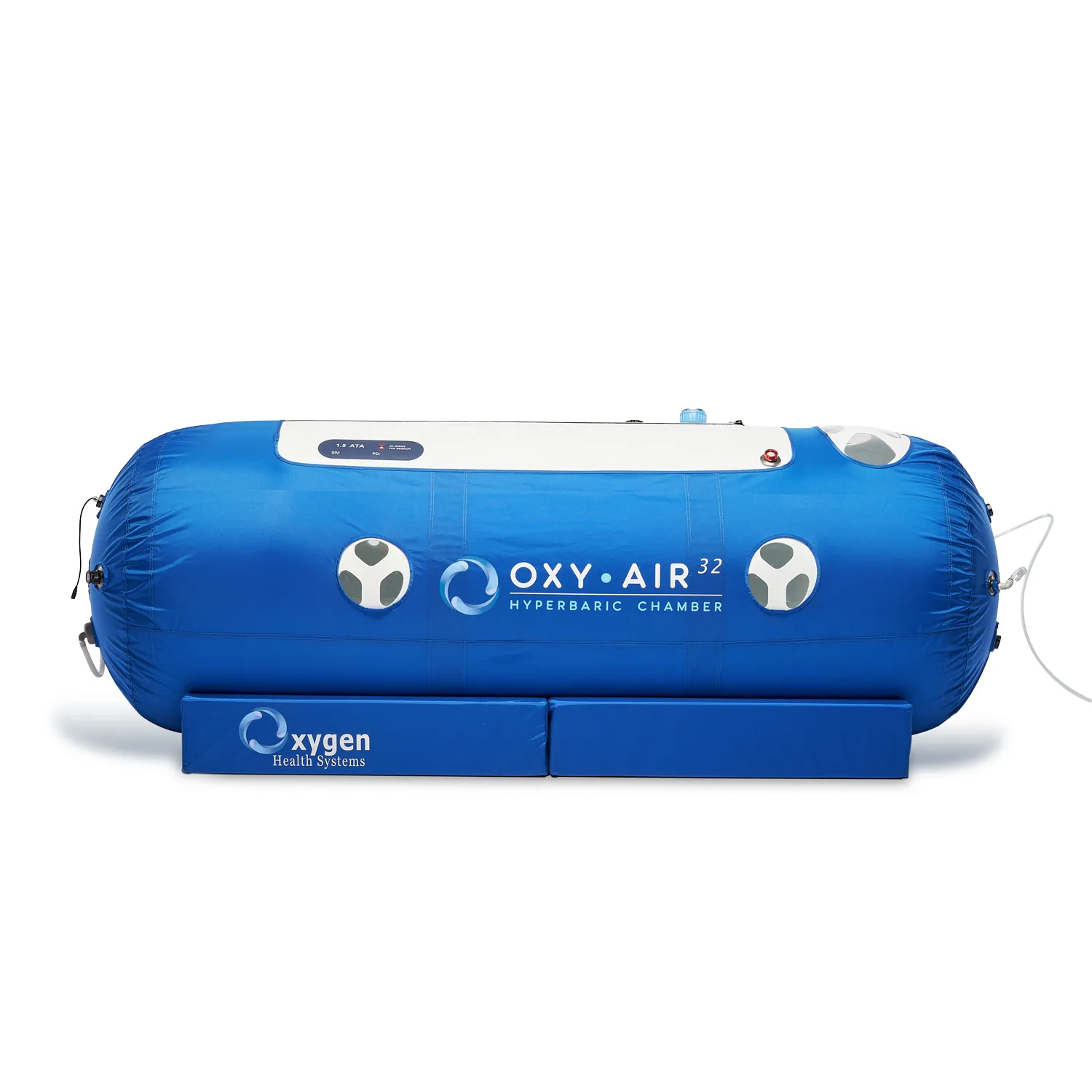
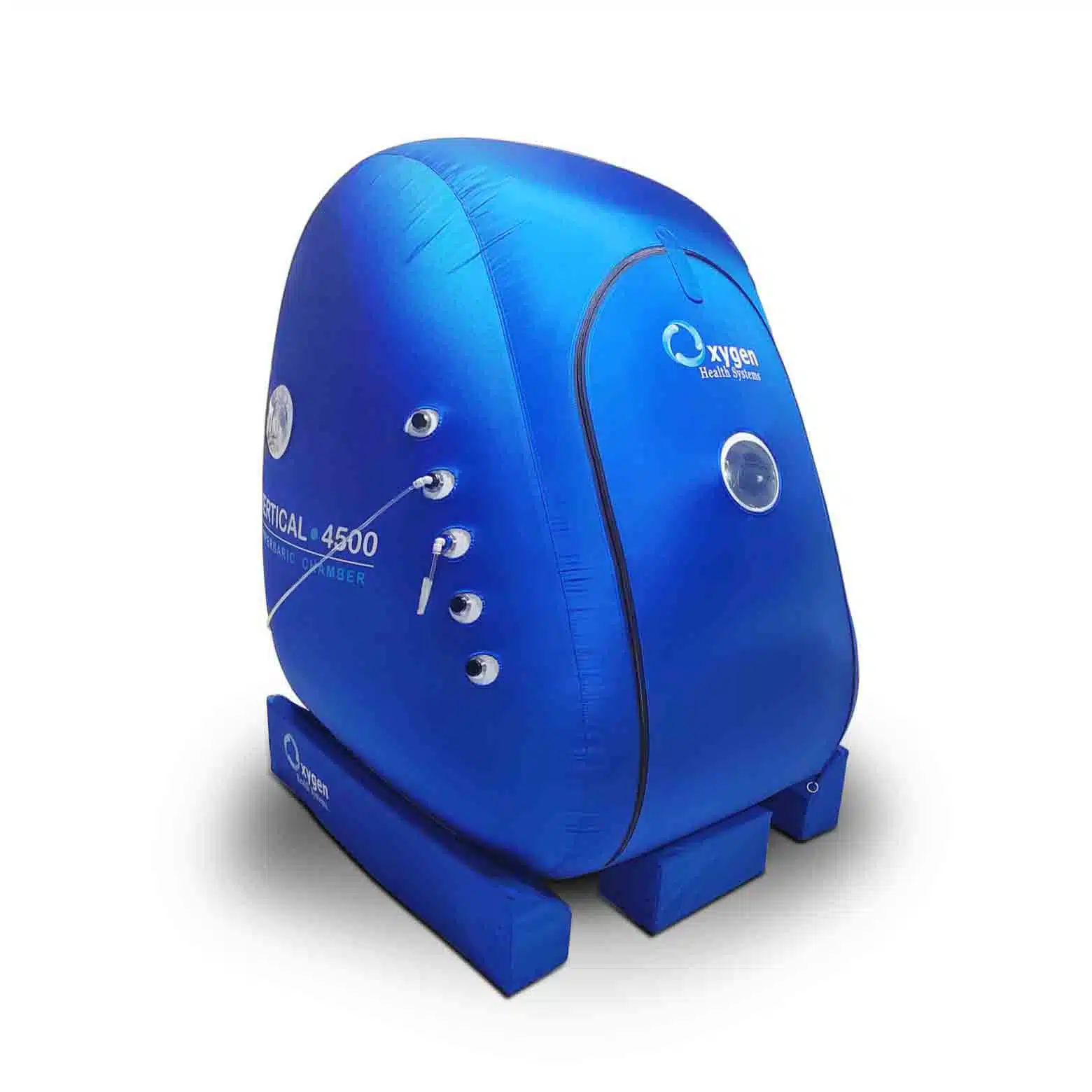
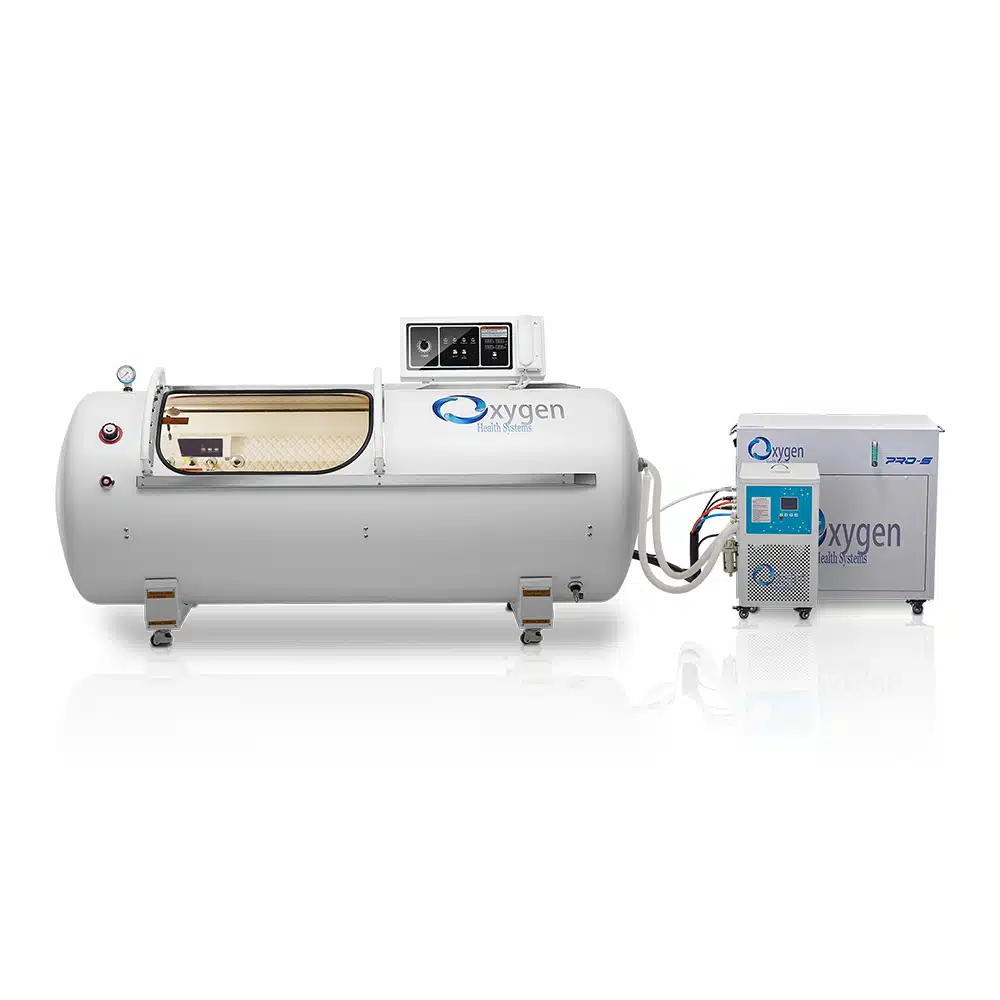
Sold together as a skin-focused programme, two equipment-led services generate more per client visit than either does alone, and both fill room time without consuming practitioner hours. The Oxygen Health Systems range covers both red light equipment and chambers, which makes specifying a combined room more straightforward.
Marketing It Accurately
Red light therapy attracts some of the most overstated marketing in aesthetics, which creates an opening for a practice willing to be precise.
Three habits do most of the work. Describe what your device does in specifics, naming wavelengths and session structure. Describe what published trials measured, with the population and duration attached, so a client understands why a course exists. And set expectations at the point of sale, since most published protocols run over four weeks or longer before outcomes are assessed.
Before-and-after photography deserves particular care. Lighting, angle and makeup account for a great deal of apparent change, and clients have become adept at spotting inconsistency. Standardised conditions protect your credibility, and they also give you a usable record if a client questions their result.
The commercial argument for restraint is simple enough. Clients who were sold a realistic expectation complete their course and buy another. Clients who were sold a transformation ask for a refund, and they tell people.
What To Look At When Buying
Device quality varies enormously in this category, and specification sheets are inconsistent across manufacturers. Four things to establish:
- Wavelengths. Which specific wavelengths the device emits, and in what proportion. Red and near-infrared do different things at different depths.
- Irradiance at treatment distance. Power density measured at the distance a client will actually be, not at the panel surface. This is where marketing figures are least reliable.
- Treatment area. How much of the body the device covers in one session, which determines your session length and therefore your throughput.
- Service life and warranty. LED output degrades over time, so ask about expected service life, warranty terms and what happens when output drops.
At Oxygen Health Systems, you get wellness equipment backed by published certifications and quality systems, free Zoom training for your team and support seven days a week from a US-based supplier with ten years in the industry. Check what our certifications cover when you’re comparing manufacturers, since it tells you more about build standards than a brochure does.
Frequently Asked Questions
How much can a med spa charge for a red light therapy session?
Single sessions are usually priced modestly because they’re short, and most of the revenue comes from courses and memberships. Price the course so the per-session rate rewards commitment while keeping your capacity manageable.
How often do clients need red light sessions?
Published protocols typically involve several sessions a week over a period of weeks. That repetition is what makes memberships and course packages the natural commercial structure for the service.
Is red light therapy suitable for all skin types?
Photobiomodulation doesn’t rely on heat or UV, and it’s generally used across a broad range of skin types. You’ll still need an intake process, since photosensitising medications and certain conditions require a conversation with the client’s doctor first.
How long before clients see a difference?
Published trials generally run over four weeks or longer before measuring outcomes. Setting that expectation at the point of sale reduces complaints and improves course completion rates.
Does red light therapy combine well with other treatments?
It’s commonly scheduled alongside facials, skin programmes and other equipment-led services, and it’s short enough to fit around longer appointments. Sequence it according to your practitioners’ guidance for any client who’s had recent procedures.
Sources
- Photobiomodulation Reduces Periocular Wrinkle Volume by 30%: A Randomized Controlled Trial, Photobiomodulation, Photomedicine, and Laser Surgery (2023): https://pubmed.ncbi.nlm.nih.gov/36780572/
- Hachmo Y, Hadanny A, et al., The effect of hyperbaric oxygen therapy on the pathophysiology of skin aging: a prospective clinical trial, Aging (2021): https://www.ncbi.nlm.nih.gov/pmc/articles/PMC8660605/