
Hyperbaric Oxygen Therapy
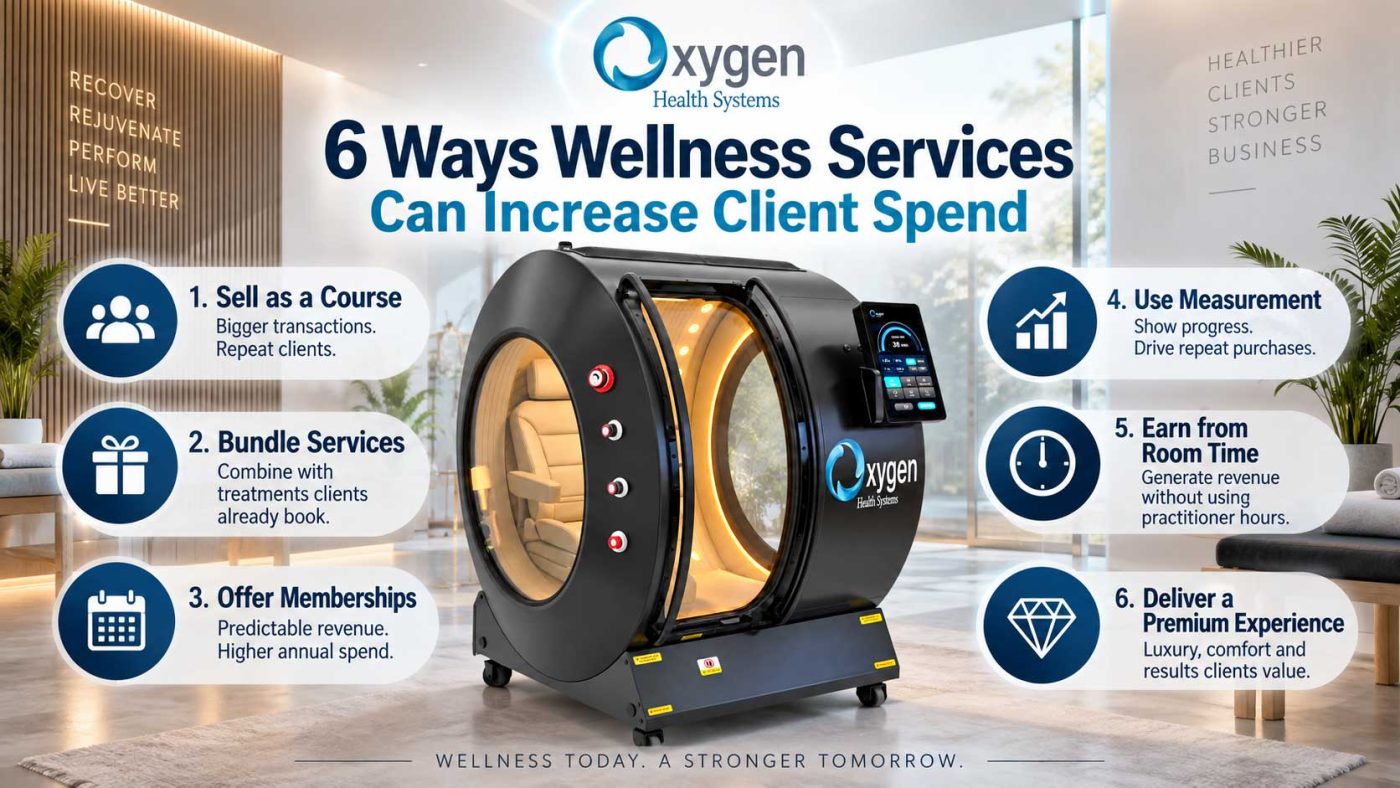
6 Ways Wellness Services Can Increase Client Spend
Sep
Average spend per client is the figure that decides whether a beauty or aesthetics business grows without needing more people through the door. It moves when an existing client finds something new on the menu worth buying, which is why wellness services have become the standard route to increasing it.
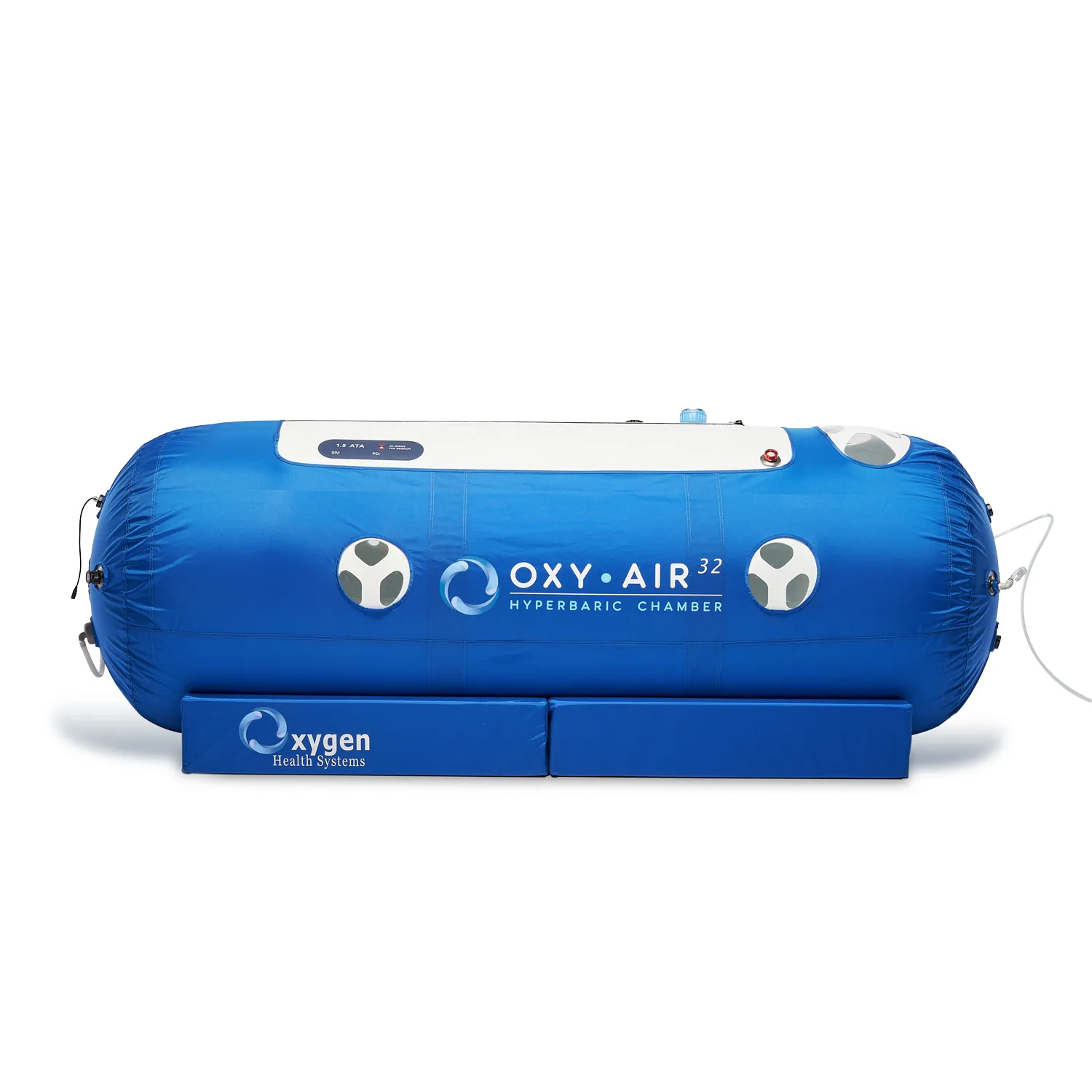
Hyperbaric oxygen therapy is the service doing most of that work at the higher end. Sessions run 60 to 90 minutes, they’re sold as courses, and they earn from room time, which leaves your practitioners’ hours free for everything else. The Global Wellness Institute recorded the global wellness economy at $6.8 trillion in 2024 with 7.9% growth across the year, and the clients driving that spending are largely the same people already booking facials and injectables. The six approaches below cover how to convert that overlap into higher spend per client.
1. Sell Hyperbaric Therapy As A Course
A single session produces one transaction. A course of ten or twelve produces a considerably larger one, and it commits the client to a schedule.
The structure has a genuine rationale behind it, which makes it easier to explain. Published hyperbaric research almost always uses repeated sessions over a period of weeks, and results are measured at the end of that protocol. Clients accept course pricing far more readily when a practitioner can say why single sessions aren’t how the therapy is studied.
Four components hold a course together: a defined number of sessions, a stated focus such as skin quality or general recovery, a per-session price below the single-session rate, and a review at the end. The review is what produces the next purchase, and it’s the part most businesses skip.
Set an expiry of three to six months so your scheduling stays predictable, and make the terms clear at point of sale.
2. Bundle Chamber Sessions With Treatments Clients Already Book
Clients buy outcomes. A bundle grouping a hyperbaric course with treatments that share a goal sells at a higher value than the same services listed separately, and it shortens the decision.
Skin quality is the most natural pairing in an aesthetics setting, and there’s research behind it. A prospective clinical trial published in Aging took repeat skin biopsies from participants in a healthy ageing cohort before and after a course of daily hyperbaric sessions. Researchers reported a significant increase in collagen density, a significant increase in elastic fibre length and an increase in the number of blood vessels in the tissue, with decreases in fibre fragmentation and tissue senescent cell counts. Elastic fibre density and thickness showed no change.
The sample was small and specific: thirteen participants gave consent for repeated biopsies out of a cohort of 70, all men with an average age of 68, on a daily protocol over three months. That’s enough to describe accurately in a bundle description and to explain why the programme runs over weeks. It isn’t enough to promise a client a cosmetic result, and your copy shouldn’t try.
Price the bundle at a modest discount against the separate total. Your delivery cost barely moves, because the chamber and the treatment room were already scheduled.
3. Put Chamber Access Into A Membership
Memberships convert irregular purchases into predictable monthly revenue, and they raise annual spend because billing continues through months when a client would otherwise book nothing.
Hyperbaric sessions need careful handling inside a membership, since a chamber has hard daily capacity limits. Unlimited access will eat your peak slots and leave you unable to sell sessions to anyone else. A capped monthly allowance of two or four sessions works, particularly when the membership also includes shorter services such as red light or infrared, which absorb demand without consuming a 90-minute booking.
Two safeguards keep this profitable. Cap usage at a level your capacity can genuinely absorb, and set a minimum term so the cost of onboarding a member is recovered before they can leave.
4. Use Measurement To Anchor The Programme
A measured starting point makes a hyperbaric course easier to sell and much easier to review. Skin analysis, body composition or biomarker testing at the start gives the client a reason to commit and gives you a reason to schedule the conversation that sells the next block.
The research supports the framing. A prospective trial in Aging enrolled 35 healthy adults aged 64 and over for 60 daily hyperbaric sessions and reported telomere length in several immune cell types increasing by more than 20%, with senescent cell populations falling by roughly 11% to 37% depending on cell type. Small sample, intensive protocol, single research centre. Use it to explain why measurement and a defined course go together, and keep the language descriptive of what researchers measured.
Testing is itself billable, and it reliably increases the value of what a client buys next, because the conversation moves from a general recommendation to a specific one.
5. Let The Chamber Earn From Room Time
Most beauty and aesthetics businesses are limited by practitioner hours. Every treatment requiring a therapist or an injector competes for the same finite supply, which caps what the business can earn in a day.
A chamber breaks that cap. A trained attendant supervises the session and doesn’t have to deliver it, so the room earns while your clinical staff are booked elsewhere. That’s what makes daytime and midweek capacity worth something, and those slots are close to pure margin once fixed costs are covered.
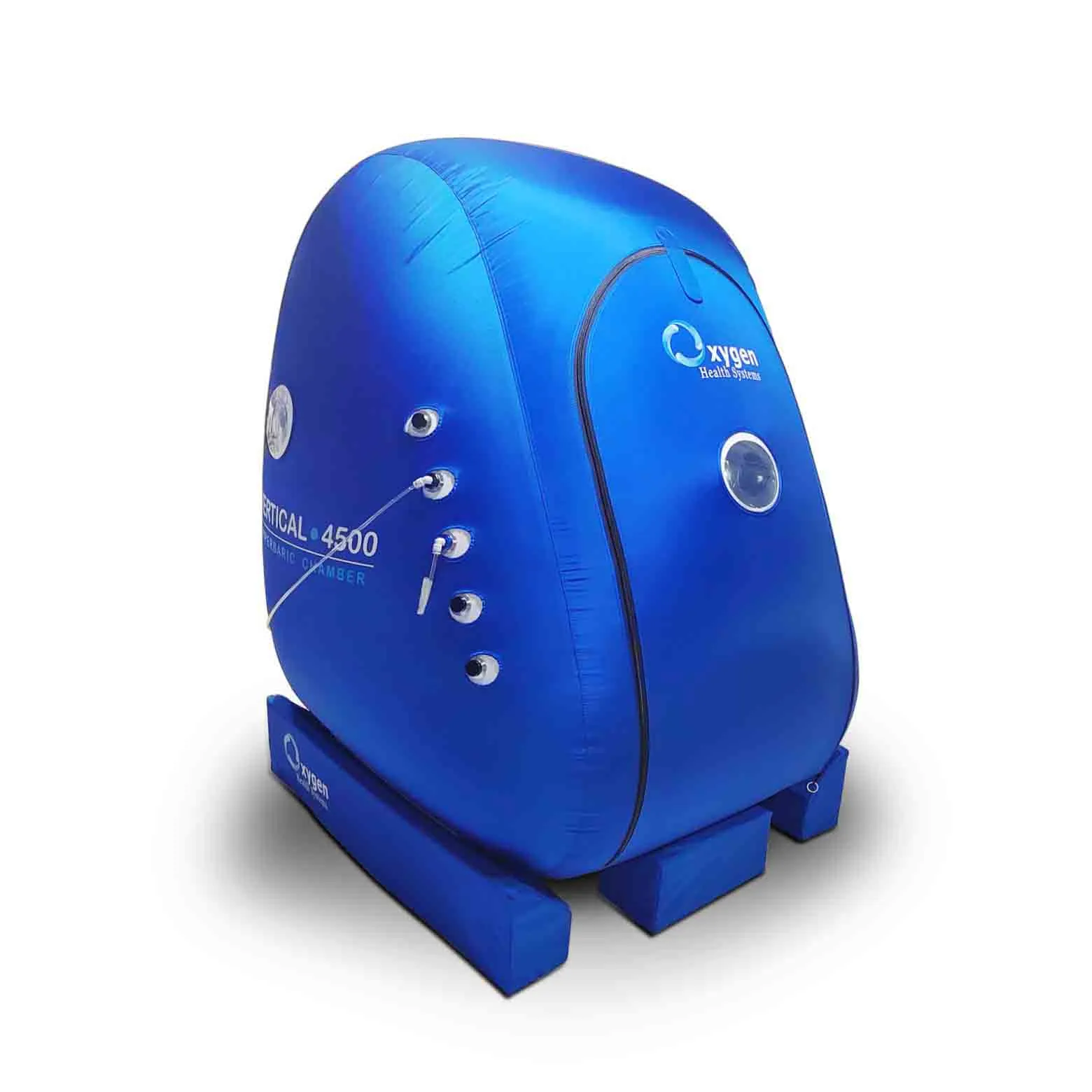
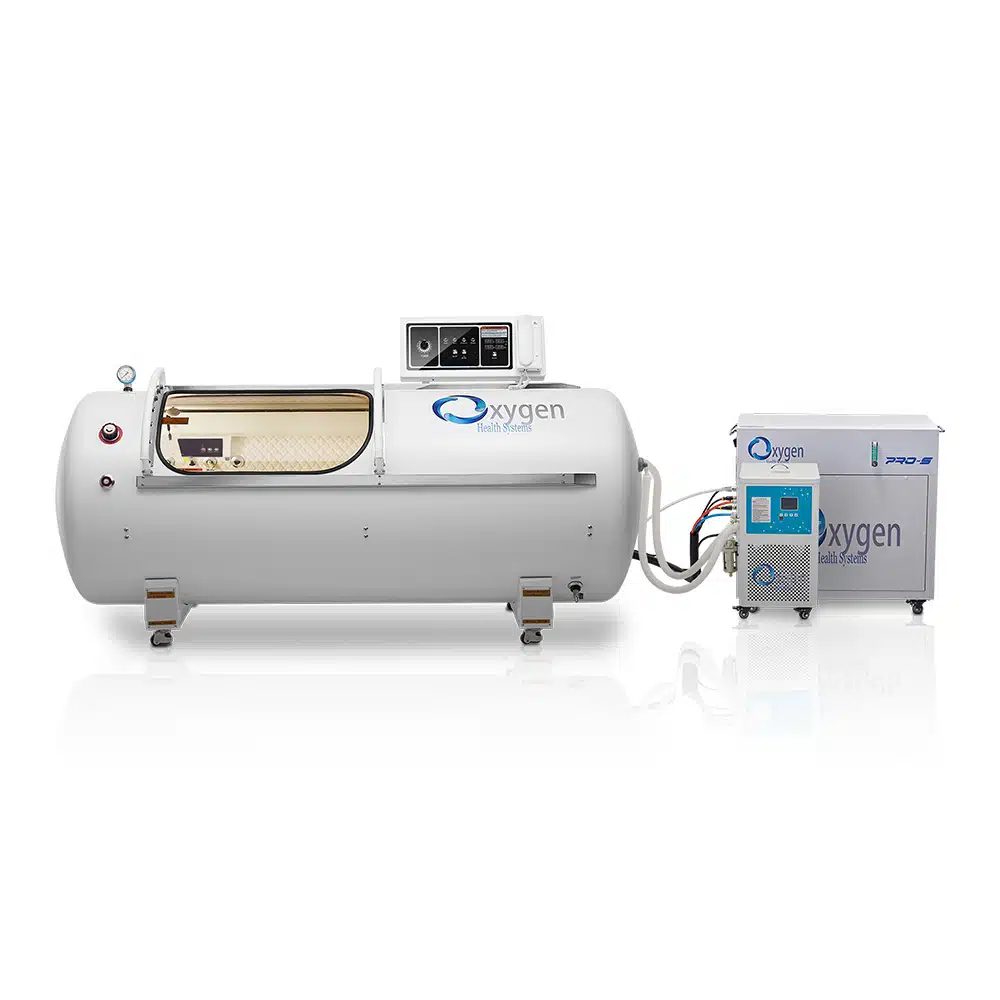
Build quality decides whether the arithmetic holds. Commercial use means several sessions a day, every day, which is a different duty cycle from the home market entirely. Our ASME certified chamber collection sets out pressures, dimensions and configurations, and it’s worth checking those against your room, your access route and your electrical supply before you go further.
Model what the chamber needs to earn before you commit. Our <u>ROI calculator</u> takes your session pricing, expected bookings and running costs and returns a payback period you can test against a cautious first year.
6. Sell Maintenance After The Course Ends
The end of a course is the point where most businesses lose the client, and it’s the cheapest sale available to them.
Three formats work. A maintenance block of monthly or fortnightly sessions keeps the client in the building at lower intensity. A repeat course scheduled for six months later suits clients who responded well and want to run the protocol again. Aftercare products related to the programme’s focus add margin at the same appointment.
Make the recommendation during the final session while the practitioner and client are already discussing results. Retail and follow-on bookings offered at the reception desk convert poorly by comparison, and the difference is large enough to be worth restructuring your process around.
What Makes All Six Work
Each approach depends on the same foundations, and they’re worth auditing before you add anything.
Booking has to sit in the system clients already use, because a separate process for one service loses a meaningful share of sales. Staff need enough training to describe the therapy accurately, since clients research before they buy and will notice improvisation. Screening needs to be in place, as some clients should speak to their doctor before starting. And your claims need to stay inside the evidence, because a client who feels oversold doesn’t return and does tell people.
At Oxygen Health Systems, you get chambers manufactured under ISO 13485, ISO 9001:2015 and ISO 14001 quality systems, free Zoom training for your team and seven-day support from a US-based supplier with ten years in the industry. Review the certifications behind the equipment when you compare manufacturers, because that documentation is also what your insurer will ask to see.
Frequently Asked Questions
How much can hyperbaric therapy add to spend per client?
The uplift depends on your course pricing and how many clients complete a course and then buy maintenance. Modelling a conservative completion rate against your existing client numbers gives you a figure you can plan around.
Should hyperbaric sessions be sold individually or as a course?
Single sessions work as a trial, and courses are where the revenue sits. Published protocols use repeated sessions over weeks, so the course structure reflects how the therapy is actually studied.
How do you introduce a chamber to clients who only book beauty treatments?
Group it by outcome alongside the treatments that share a goal, usually skin quality or general wellbeing, and have practitioners raise it during appointments. A direct conversation converts far better than signage.
What does a hyperbaric session need in terms of staffing?
A trained attendant to start, monitor and close the session, plus turnaround time for cleaning and resetting. Suppliers who include operator training in the purchase remove a recurring cost from your budget.
Do clients need screening before a hyperbaric course?
Yes. An intake process covering relevant conditions and medications is standard, and some clients should check with their doctor first. Your supplier should provide screening documentation as part of training.
Sources
- Global Wellness Institute, Global Wellness Economy Monitor 2025 (November 2025): https://globalwellnessinstitute.org/industry-research/2025-global-wellness-economy-monitor/
- Hachmo Y, Hadanny A, et al., The effect of hyperbaric oxygen therapy on the pathophysiology of skin aging: a prospective clinical trial, Aging (2021): https://www.ncbi.nlm.nih.gov/pmc/articles/PMC8660605/
- Hachmo Y, Hadanny A, et al., Hyperbaric oxygen therapy increases telomere length and decreases immunosenescence in isolated blood cells: a prospective trial, Aging (2020): https://www.ncbi.nlm.nih.gov/pmc/articles/PMC7746357/