
Life Style
What a shared session in a multiplace hyperbaric chamber is actually like

Nov
If you have already decided that a multiplace hyperbaric chamber makes sense for your family, the next question is usually practical: what actually happens once you and the people you are treating with are inside? Multiplace chambers, from the dual-seat XLS-40 up through larger walk-in units like the 64D, are built so two or more people can sit through a session together in one shared space. But knowing that in theory and knowing what to expect moment to moment are different things. This guide walks through the mechanics of a real shared session, from orientation to the final depressurization, so you can walk in prepared instead of guessing.
Before you step inside: what orientation covers
Every reputable facility or home setup starts with an orientation, even for people who have done research on their own. A typical orientation covers how the door seals and how to confirm it, where the oxygen delivery equipment is and how to put it on, the hand signals or verbal cues used to communicate with an outside operator (if one is present), and what to do if anyone feels discomfort in their ears or sinuses during pressurization. For home multiplace units, this orientation usually happens once with the family who owns the chamber, then gets repeated in short form before each new user’s first session.
Clothing and prep are simple. Loose, breathable clothing (cotton is common) is preferred over synthetic fabrics, and metal, lighters, and electronics generally stay outside the chamber per standard hyperbaric safety practice. Most people bring a bottle of water, a book, or nothing at all. Sessions in an OHS multiplace chamber typically run 60 to 90 minutes including pressurization and depressurization, so plan around that block without rushing in right before or right after a large meal.
How seating and positioning actually work
Walk-in multiplace chambers like the XLS-40 and the 64D are built with bench-style or chair seating along the interior, so occupants sit upright facing each other or side by side rather than lying down as in a single-person monoplace unit. This is one of the most immediately noticeable differences from a monoplace session: you can see the other person’s face, adjust your own seat, and generally move around more than you would in a lie-flat tube.
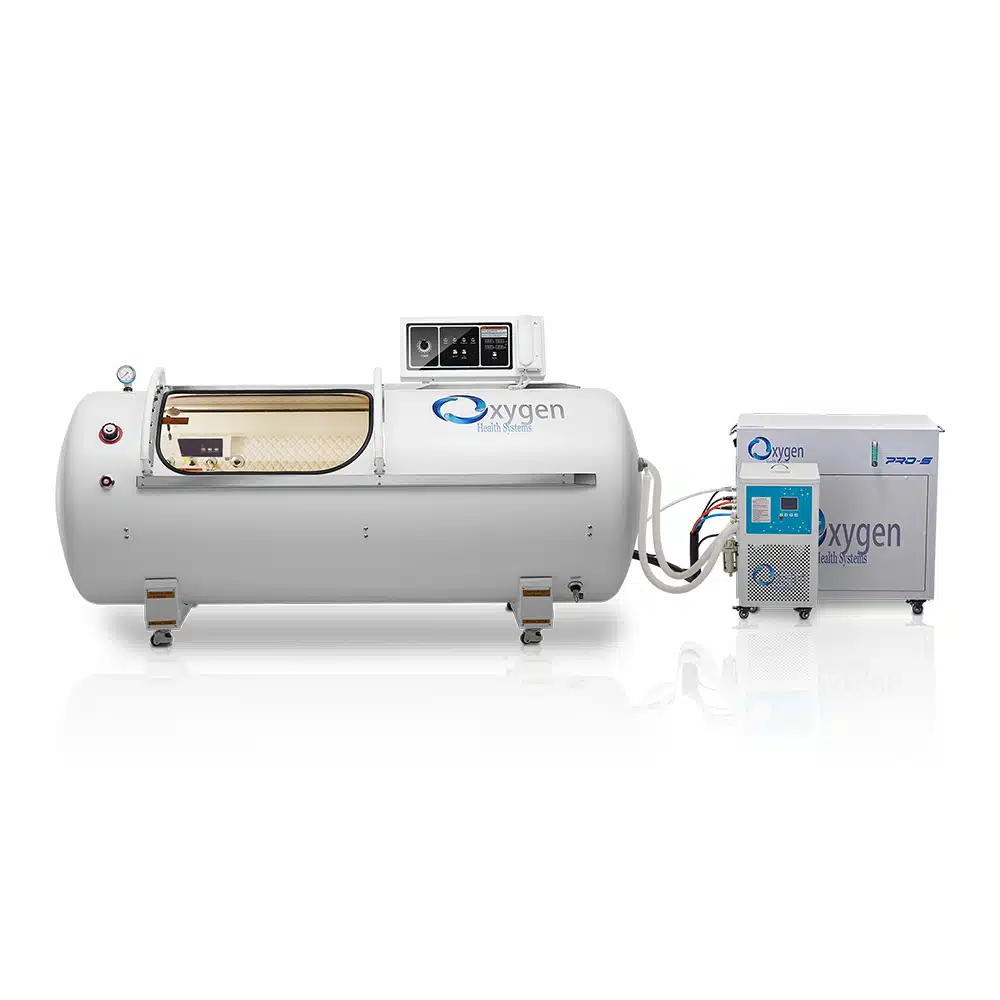
For the larger clinical and demanding-home-use chambers, like the OxyVista 64D (2 to 4 occupants) or the flagship Concourse 9000 (1 to 4 occupants), the same basic idea holds: individual seating within one shared pressurized room, not separate compartments. Where you sit is mostly a matter of comfort, though facilities often seat a first-time or anxious participant closer to the door or the operator’s line of sight so they are easy to check on.
Oxygen delivery: mask or hood, while the chamber breathes air
This is the detail that surprises a lot of new users. In a multiplace chamber, the surrounding chamber environment is pressurized with regular air, not pure oxygen. Each occupant then receives their own supplemental oxygen individually through a mask or a hood (a soft, clear canopy that fits over the head), connected to the chamber’s oxygen delivery system.
In practice, this means everyone in the chamber is breathing their own oxygen supply while sharing the same pressurized room. You typically put your mask or hood on once pressurization is underway or complete, following the sequence your orientation covered. If someone needs to briefly remove their mask to talk or drink water, they generally can, since the surrounding chamber air is not itself the source of concentrated oxygen. This individualized delivery is also what lets people with different session lengths or oxygen needs share one chamber safely, since each person’s mask or hood is its own connection point.
Pressurization: what it feels like and how to equalize as a group
Pressurization is the phase where the chamber’s internal pressure rises to the target level, commonly 2.0 ATA in OHS’s hard-shell multiplace units. Most people describe the sensation as similar to descending in an airplane or driving down a mountain: a feeling of fullness or pressure in the ears that needs to be relieved by equalizing.
The most common technique is the same one used for air travel: pinching the nose gently and swallowing, yawning, or gently blowing against closed nostrils (a modified Valsalva maneuver) to let air move through the Eustachian tubes. The part that is different in a shared session is pacing. Not everyone equalizes at the same rate, and that is normal. Children, people with a cold, or first-time users may need pressurization to slow down or pause briefly, while an experienced adult next to them might equalize almost instantly. A trained operator will typically pace pressurization to the slowest person in the group rather than an average, pausing if anyone signals discomfort. This is one reason orientation covers hand signals ahead of time: with a mask or hood on, it is easier to raise a hand or tap a shoulder than to speak clearly.
Once at target pressure, the chamber levels off and stays there for the treatment portion of the session, which is generally the longest and most uneventful part.
Communication and conversation during the session
Talking during a multiplace session is normal and part of what makes it different from a solo monoplace session. With a mask on, speech is muffled but usually still audible to someone sitting close by; with a hood, conversation is a bit easier since the hood does not cover the mouth as tightly. Many families and couples use the time to talk, read side by side, listen to music or a show if the chamber supports it, or simply relax quietly together. If an operator is monitoring from outside the chamber, most units include a way to communicate with them, whether through an intercom, a viewing window, or hand signals established during orientation.
Depressurization: easing back out
At the end of the session, depressurization brings the chamber back down to normal atmospheric pressure gradually. This phase can also produce a mild ear sensation, generally less noticeable than pressurization, and the same equalizing techniques apply if needed. Some OHS hard chamber models include an auto-depressurization feature that ends the session smoothly and quietly without an operator manually managing the release. Once the chamber reaches normal pressure, the door opens and occupants remove their masks or hoods.
It is common to feel a little tired, calm, or mildly hungry after a session, which is why many people schedule sessions when they can rest or relax afterward rather than rushing into something demanding.
A note on individual health considerations
Even in a shared session, hyperbaric therapy is still an individual medical consideration for each person in the chamber. Certain lung conditions, ear or sinus issues, pregnancy, and some medications can affect whether or how a person should use a hyperbaric chamber. Sharing a session with a family member does not change the fact that each occupant’s health history should be reviewed on its own, ideally with a physician, before starting hyperbaric oxygen therapy.
Common Questions
Do we all breathe pure oxygen together in a multiplace chamber? No. The chamber itself is pressurized with regular air. Each person breathes supplemental oxygen individually through their own mask or hood, which is why occupants with different needs can safely share one session.
What if my child or partner equalizes their ears more slowly than I do? That is expected and normal. Pressurization is typically paced to the slowest person in the group, and operators pause if someone signals discomfort using the hand signals covered in orientation.
Can we talk to each other during the session? Yes. Conversation is a normal part of a shared session, though speech is somewhat muffled with a mask on and clearer with a hood.
How long should we plan for, start to finish? Most multiplace sessions run roughly 60 to 90 minutes including pressurization and depressurization, though exact timing depends on the chamber and protocol.
The bottom line
A shared multiplace session is more hands-on and interactive than many people expect: individual oxygen delivery through a mask or hood, group pacing during pressurization, real conversation during treatment, and a gradual depressurization at the end. Knowing the mechanics ahead of time, from what to wear to how equalizing works as a group, makes that first session far less unfamiliar.
Oxygen Health Systems has designed multiplace hyperbaric chambers since 2014 from its Woodridge, Illinois headquarters, backed by ISO 9001, ISO 13485, and ISO 14001 certification and a three-year manufacturer’s warranty with US-based technical support.
Explore the full Oxygen Health Systems chamber lineup
Schedule a free consultation with an Oxygen Health Systems specialist
If you are still weighing whether a shared session is the right fit for your family or how a multiplace chamber compares to a home monoplace unit, “How a Multiplace Hyperbaric Chamber Helps Families” covers the benefits behind shared sessions, and “Home vs Multiplace Chambers for Family Wellness” walks through pricing and use cases to help you decide which setup fits your household.
Oxygen Health Systems | Woodridge, Illinois | Ships from the US | ISO 9001, ISO 13485, ISO 14001 Certified | ASME Code Compliant | Three-Year Manufacturer’s Warranty